
Visiting a Khipu in Sydney
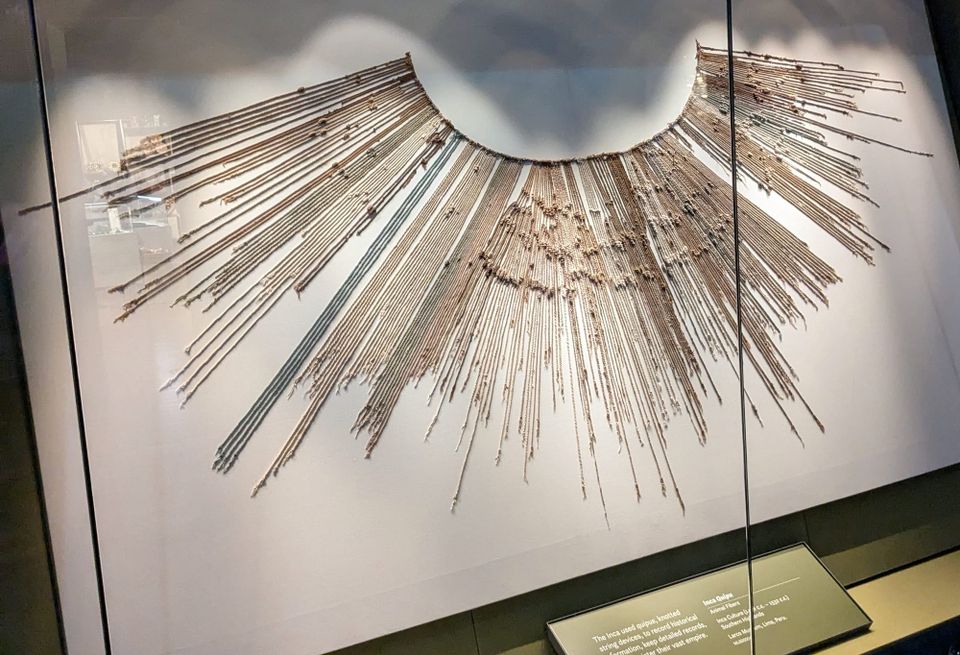
Although I am yet to locate a khipu in an Australian museum collection, I did have the chance to see a khipu on Australian soil in December 2024 at the Machu Picchu and the Golden Empires of Peru exhibition, at the Australian Museum in Sydney, presented in partnership with Museo Larco, Lima, Peru.
Being able to see a khipu in person is incredibly important for researchers and enthusiasts. And as I am located in Australia, this means such opportunities either require significant travel to the khipu, or a rare experience such as this, where the khipu has come closer to me.
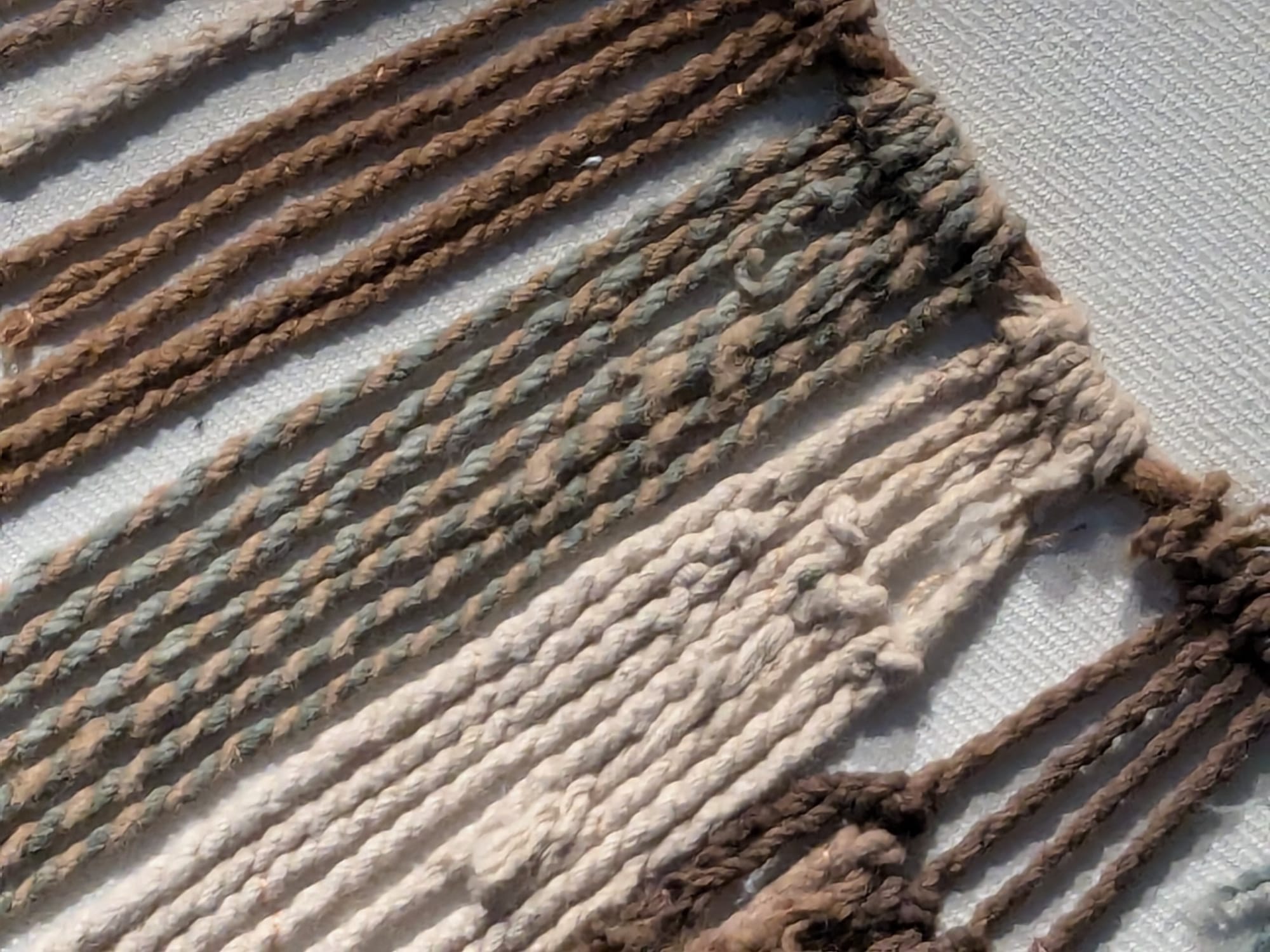
The khipu on display was ML600004, and it is probably a familiar khipu to many who read about these objects, as its image has been reproduced many times. In the Khipu Field Guide (KFG) and Open Khipu Repository this khipu is known as KH0279 (sometimes referred to as UR049 in earlier publications).
Seeing this khipu in person highlighted a key issue relevant to researchers who are primarily using digital images as their means of learning about and engaging with khipus. The lighting conditions under which images are taken, and any subsequent color alteration or enhancement, is critical to color rendering. It was particularly noticeable to me that this khipu’s coloring felt different in person compared to some color-saturated images I had previously seen of it. So, take care with colors when you’re looking at khipu images.
This khipu has been beautifully mounted, with carefully placed holding stitches in matching coloring. This means a visitor does not have to try to disappear these stitches with their imagination, and the viewing/reading/experiencing of the khipu remains virtually uninterrupted.
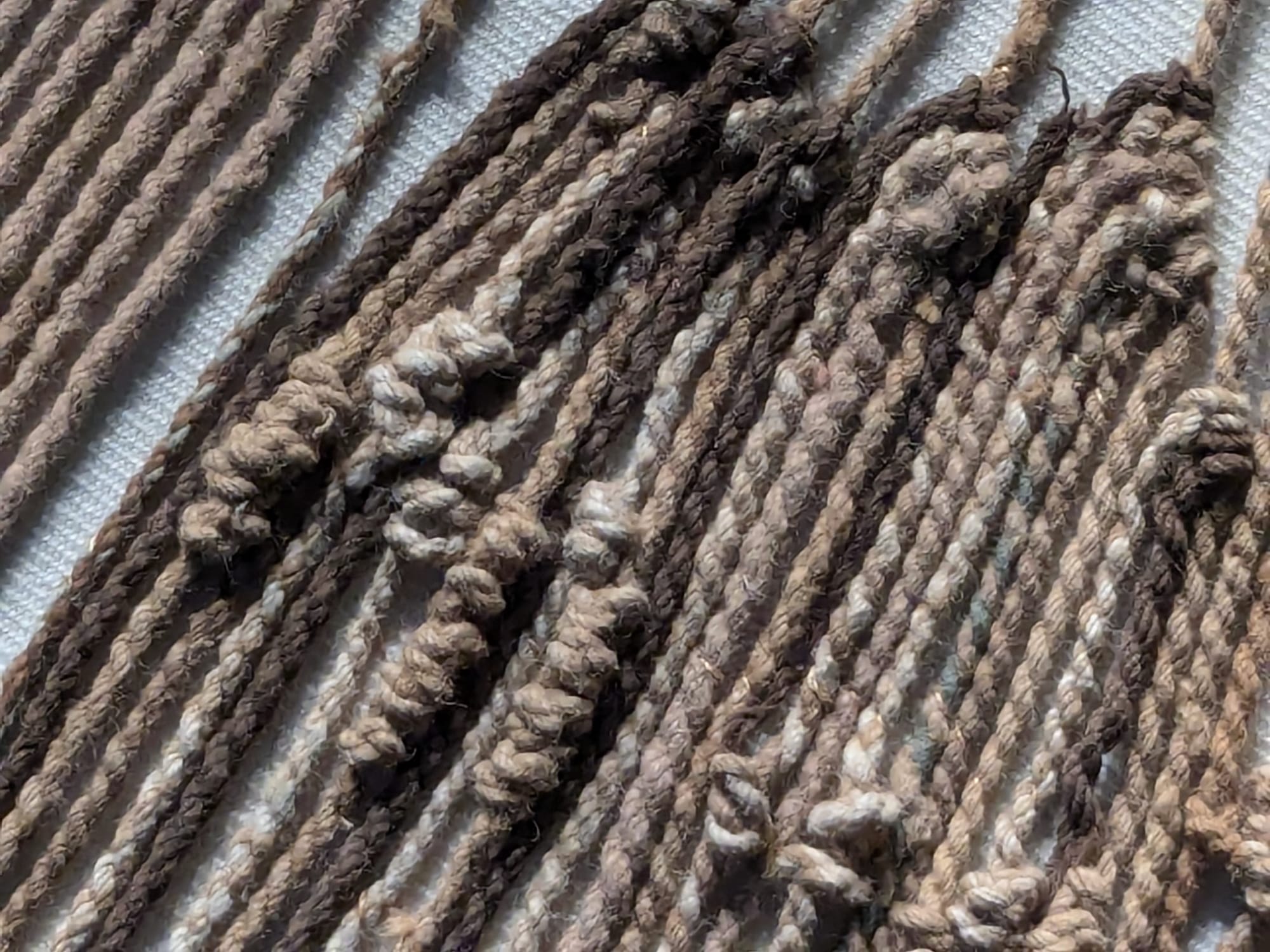
After an intense hour with the object, I spent the next few hours in the museum café going over the (hundreds of overlapping) images I had taken, and matching the cords and knots to the information held in KFG as its digital representation. This allowed me to check if I had missed any area while I was still in the museum and able to return to take more photographs; instead of waiting to discover the gap after I had flown back to Melbourne.
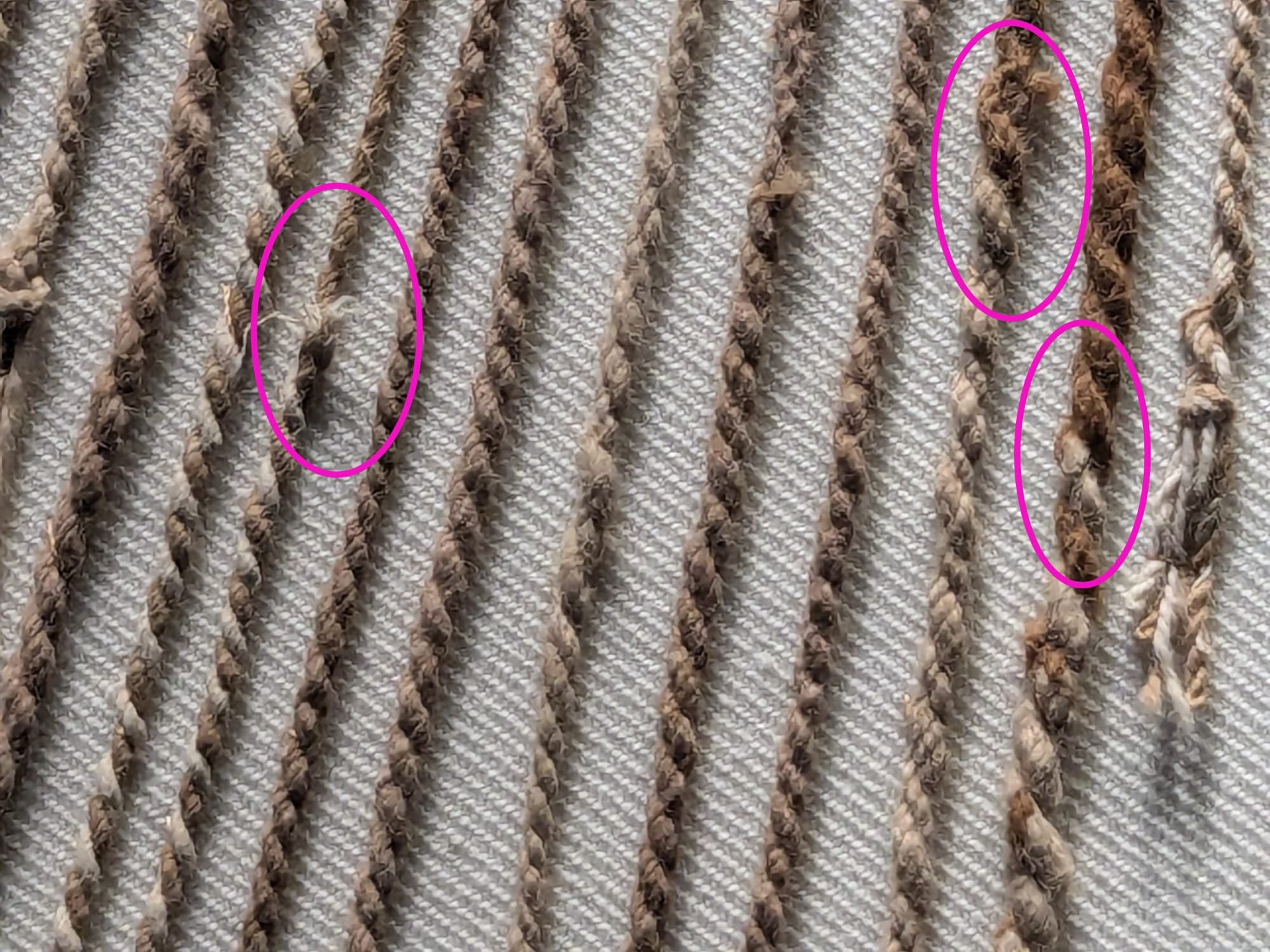
The visit and data work enabled me to revise and add to the information for this khipu in KFG. For instance, a cord had been missed in the first data recording, and it appeared that two cords that were in the first data recording were either mis-located or had since become dissociated. Several knot types and directions were also amended, and several knots added.
This work once again brings into focus the value of more than one data collector/collection for each khipu (something I discuss in more detail in an article from 2024). Unless you have done the work yourself, it is all too easy to underestimate the significant challenges and difficulty of the task. The human element inevitably introduces a natural fragility into the data collection process, and it should be a matter of expecting unintentional mistakes and planning in means of mitigating them (e.g., through multiple data recorders and recordings) instead of simply hoping that errors are not present.
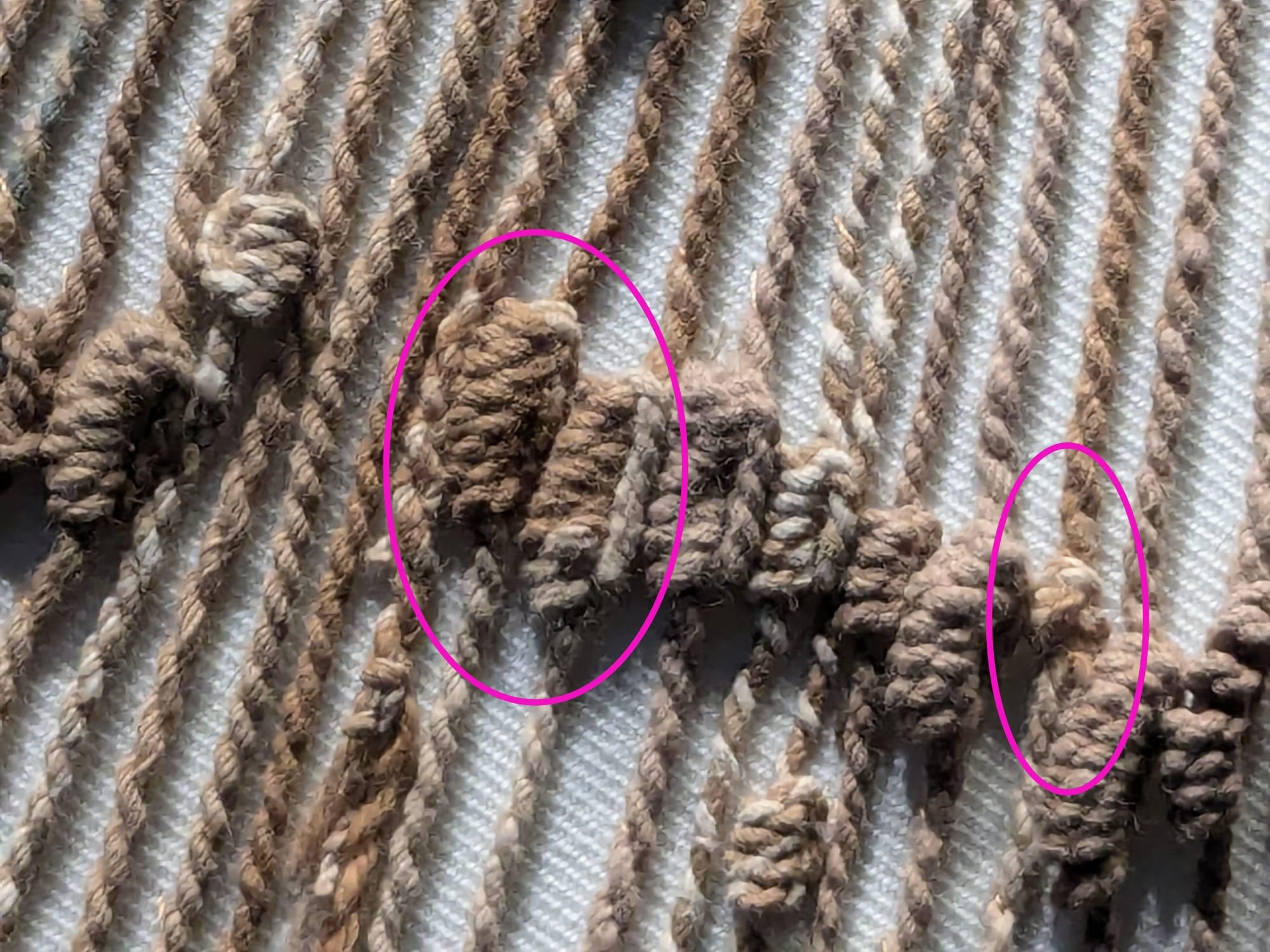
To finish this brief post, a few photographs (some of which you have already seen) to showcase just a few of the lovely features of this khipu:
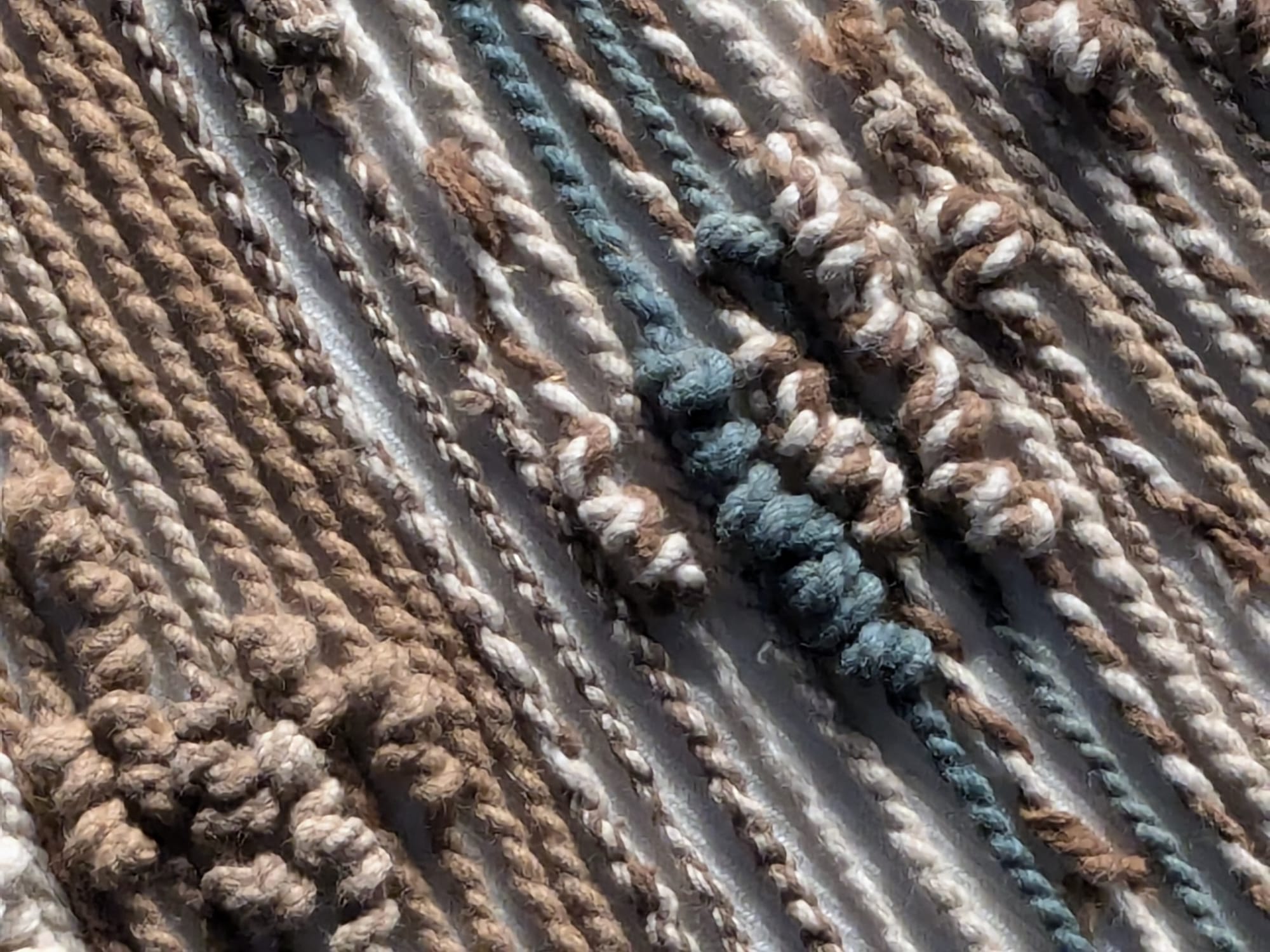
- (above) the color banding of the pendant cord clusters
- (above) the prevalence of subsidiaries in selected clusters
- (above) cord color changes occurring within knots
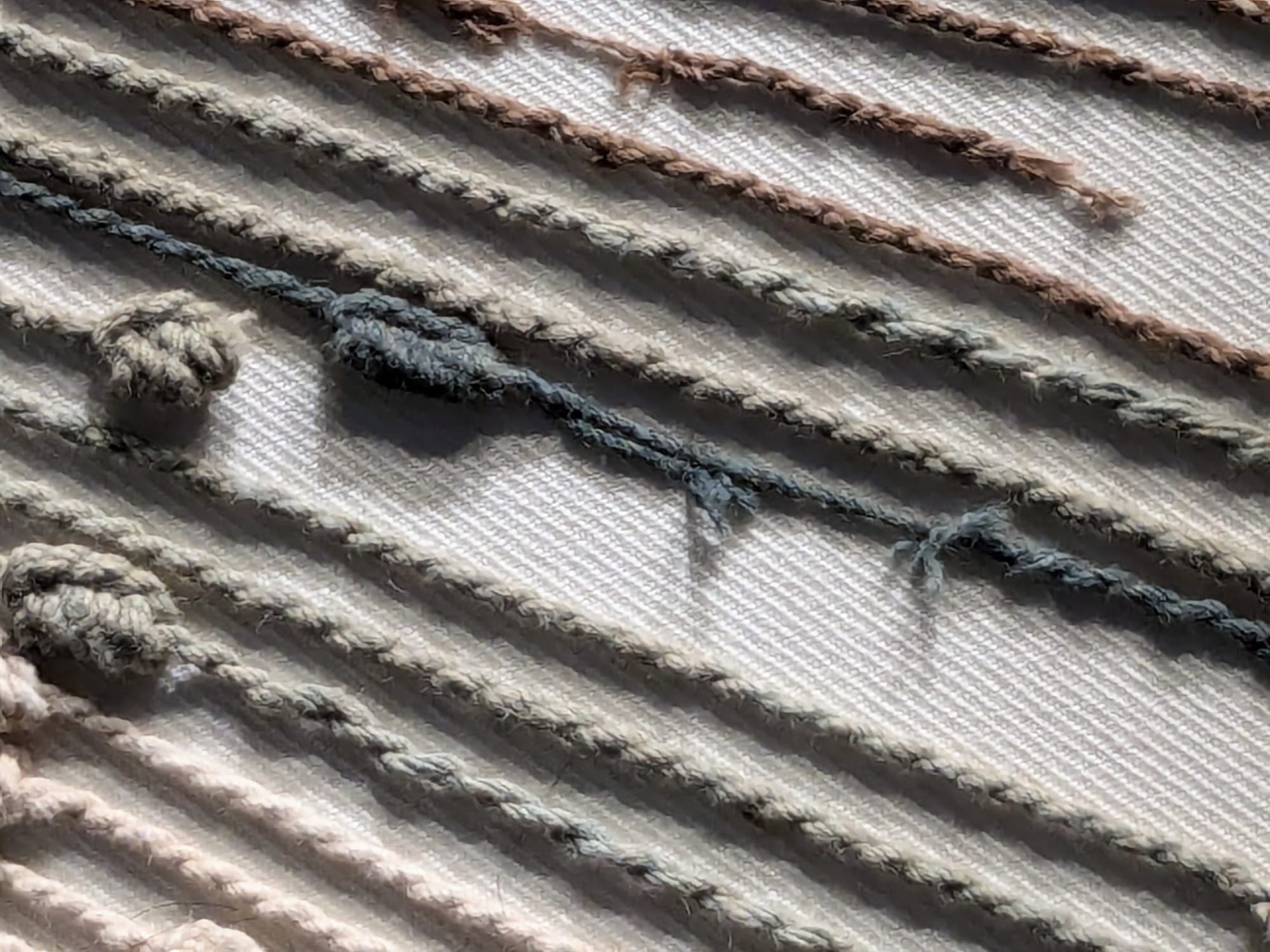
- (below) expert cord color changes
- (below) expert knotting
- (below) a photograph of the darker blue cord, simply because I just adore blue cords.
Acknowledgments. I am sincerely grateful to the wonderful museum staff who permitted and facilitated my special access for an hour before the exhibition opened to the public for the day. It meant I could hover intently in front of the khipu uninhibited by other visitors, while also not impeding others’ ability to enjoy it.
Images. All images with museum permission, within a public exhibition. Images have only been cropped; no other alteration performed.

Comments ()