
A Conversation between Rafael Dumett and Manuel Medrano
Translated using Google Translate (Leer el texto original en español)
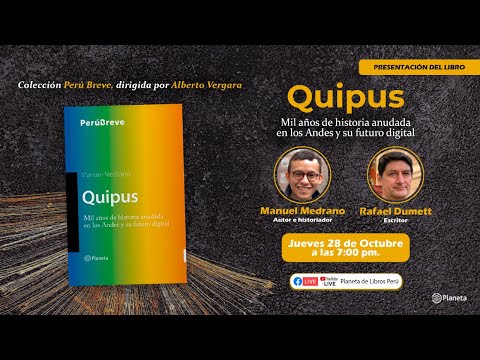
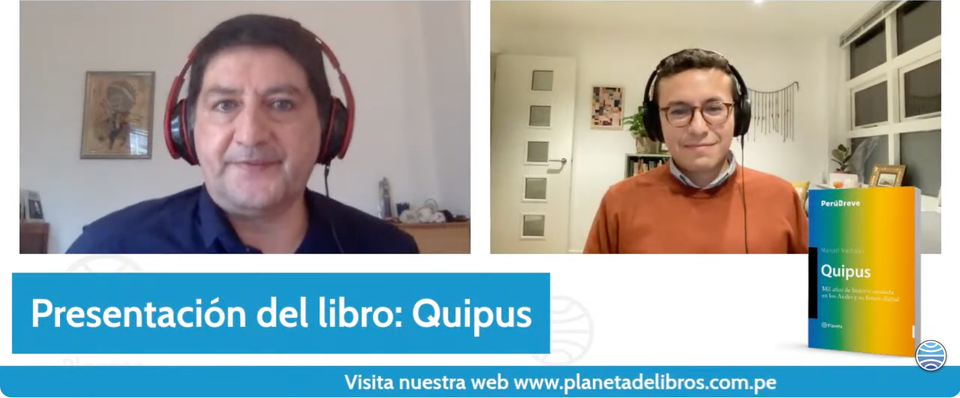
When I was presented with the idea of introducing an upcoming book in Spanish about quipus, my first thought was: I'm not the right person. After all, I'm neither an archaeologist nor a historian. Just someone who, by virtue of a literary project, began to read relatively extensively and with the greatest rigor I was capable of about these unique artifacts, one of the most original and fascinating cultural objects of Andean culture.
I must say, it wasn't an easy task. All the knowledge about quipus is scattered in books, journal articles, or compendiums, many of them not easily accessible to the average reader. With a few exceptions, they are mostly in English, French, and German. Their language is that of academia, a jargon necessary for precise communication with peers in the research environment, but absolutely exclusionary for laypeople like me. Finally, it was very difficult to separate the much chaff from the little wheat and reap a good harvest without an expert hand to guide us.
Well, the state of affairs I have just described in the present tense should, from now on, have the verbs conjugated in the past tense. Or in an imperfect past that this short book has happily come to correct. "Quipus: A Thousand Years of Knotted History in the Andes and its Digital Future" is the first book written in any language that, in non-academic language accessible to the layperson, takes stock of what is known about quipus and offers a perspective on the future of their research. A task it accomplishes with clear, concise, factual, and well-written language. It also indicates the sources for everything it says, in case the reader wants to expand their knowledge or simply verify it for themselves.
The book starts from an aspiration that is, in principle, crazy: to turn quipus into firsthand historical sources. To make them pure springs of access to the knowledge of the pre-Hispanic cultures that created them. To finally overcome the obstacles placed by the countless intermediaries who have stood between them and us in the chronicles, documents, and accounts that have until now been the only vehicles for understanding them. Inevitable intermediaries, but ones that have constructed what Medrano aptly calls "labyrinths of mirrors" that distort the vision.
There could not be a less ideal time for this task. The last few years have witnessed an explosion of discoveries and research on quipus that have come to light, and the development of technology, especially databases, which, according to Manuel, will allow for the processing of digitized information, opening up paths that are currently unthinkable. There is also a renewed interest among readers in our language and our country in knowing themselves and the legacy left by our ancestors.
It is poetic justice that the author of this endeavor is Manuel Medrano, a 25-year-old researcher and Harvard graduate, an American of Mexican descent and the grandson of a man who worked for 40 years as an agricultural laborer in the fields outside Sacramento, California, and who never learned to read or write. While still an undergraduate student, Manuel did something unprecedented: he managed to establish a partial correspondence between a 17th-century Spanish census document and a group of six quipus, apparently from the same geographical area. Never before had such an explicit link been proposed between a series of surviving quipus and a colonial document that duplicated their content and constitutes a possible key to their decipherment.
Manuel, on behalf of the laypeople of the world who have been waiting for this, thank you very much for this book.

Comments ()